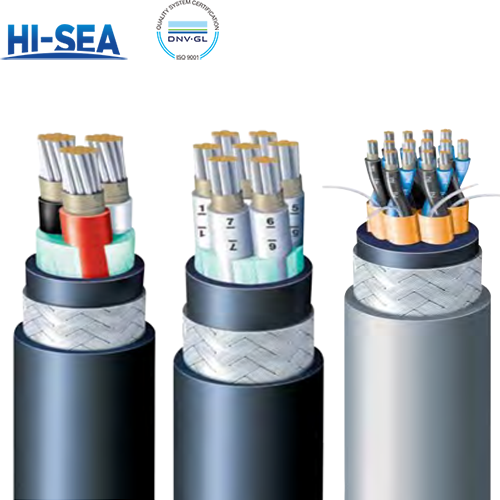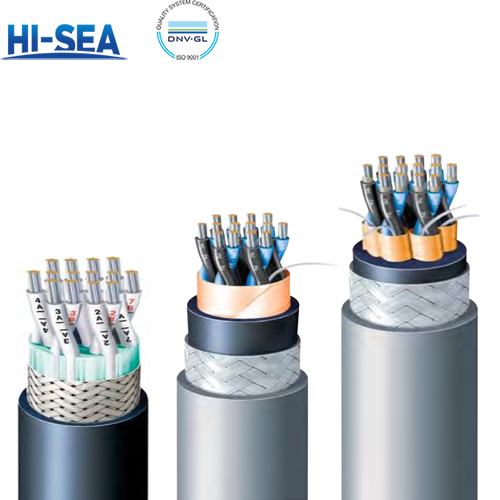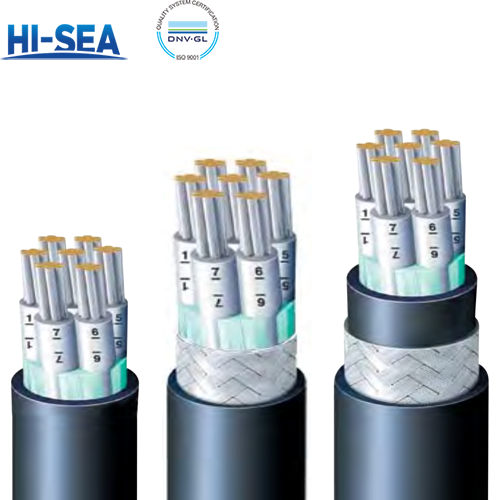
 Marine Cables.png)
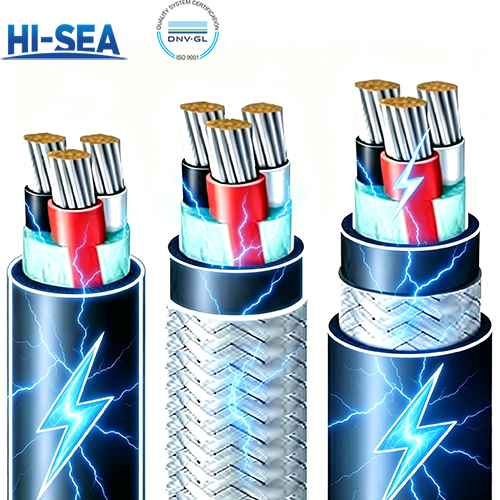
Shipboard Power Cables - Marine Power Supply Cables
Looking for a reliable resource on shipboard power cables? This complete guide delivers everything you need—from construction and insulation types to voltage ratings, fire safety standards, and marine approvals. Whether you’re designing, installing, or maintaining vessel electrical systems, the technical specification section helps you select the right cable for every application: propulsion, lighting, control, or emergency power. Clear tables, diagrams, and compliance references make complex choices simple. Ensure safety, reduce downtime, and meet class requirements. Download your essential reference today.
Slide to bottom of this page for PDF datasheet then contact us to get a quote
Overview
1 What you need to know about different shipboard power cable models
Model names are just labels – construction & rated voltage are the most important
For example: Chinese marine power cable model CEV92/SA 0.6/1KV and Japanese marine power cable model FA-DPYCY 0.6/1KV have the same construction and rating – they are functionally identical.
Cable Model | CEV92/SA 0.6/1KV | FA-DPYCY 0.6/1KV |
Conductor | Copper | Copper |
Insulation | EPR | EPR |
Inner Sheath | PVC | PVC |
Armor | Galvanized Steel Wire | Galvanized Steel Wire |
Outer Sheath | PVC | PVC |
Rated Voltage | 0.6/1KV | 0.6/1KV |
Different nations and makers have their own naming rules for marine cables, you can share the cable models or construction diagram, our technical team will give you technical proposal with equivalent cable models.
2 Chinese Marine Cable Code Explanation
Want to know more about Chinese Marine Cable Code please check following link:
Chinese Marine Cable Code Explanation
3 Overview of Technical Parameters
Parameter category | Range/Standard |
Rated voltage | 0.6/1kV, 1.8/3kV |
Conductor | Tinned copper(class 2, class 5 & class 6) |
Insulation | EPR, XLPE |
Inner sheath | No inner sheath(lightweight design), Inner sheath(Enhance mechanical protection) |
Armor | Galvanized steel wire/Tinned copper wire/No armor |
Outer sheath | No outer sheath/PVC/SHF1/SHF2 |
Flame retardant | IEC 60332-1-2 (Single cable) / IEC 60332-3-22 Category A (Bunched cable) |
Fire resistant | IEC 60331 |
Low-smoke zero-halogen(LSZH) | IEC 61034, IEC 60754 |
4 Analysis of Technical Specification
4.1 Insulation Material
PVC: Not a low-smoke zero halogen material, seldom used now.
EPR: More flexible, Suitable for applications such as deck mechanical connections where frequent exposure to mechanical stress is required.
XLPE: Excellent comprehensive performance and high cost-effectiveness.
4.2 Flame Retardant & Fire Resistant
Flame Retardant: Comply with IEC 60332-3-22 Category A, preventing the spread of fire.
Fire Resistant: Comply with IEC 60331, essential for emergency circuits (fire pumps, escape lighting). Conductor covered by fire resistant mica tape, it ensures normal operation of cables for a certain period of time.
4.3 Low-smoke Zero-halogen(LSZH)
Cable use EPR or XLPE insulation and sheath materials are SHF1 or SHF2 are Low-smoke Zero-halogen(LSZH) cable, they usually used in passenger ships, yachts, and enclosed cabins to reduce toxic gases and smoke, compliant with IEC 61034, IEC 60754.
4.4 Flexible conductor
Class 5 or Class 6: Suitable for frequent movement and confined spaces. Smaller bending radius than Class 2 conductor.
4.5 Lightweight design(no inner sheath)
Advantage: lower weight, suitable for fixed installation scenarios with no risk of severe mechanical damage.
4.6 Armor type
Galvanized steel wire braided: resistant to tension and compression, suitable for vertical risers or buried underground.
Tinned copper wire braided: It provides both electromagnetic shielding and mechanical protection, and is commonly used in inverter power cables.
5 Standard & Compliance
5.1 Material & Core Standard
Standard | Standard name | Standard Scope of Application |
IEC 60228 | Conductors of insulated cables | Specified conductor structure (copper conductor, tinned copper conductor, Class 1 solid conductor, Class 2 stranded conductor, Class 5/6 flexible conductor) |
IEC 60092-360 | Electrical installations in ships - Part 360: Insulating and sheathing materials for shipboard and offshore units, power, control, instrumentation and telecommunication cables | Main standards for materials |
IEC 60092-350 | Electrical installations in ships - Part 350: Shipboard power cables - General construction and test requirements | The basic standard for shipboard cables stipulates general material, structural, and testing requirements |
5.2 Performance Standard
Performance | Standard | Requirement |
Single Cable Flame Retardant | IEC 60332-1-2 | Passed |
Bunched Cable Flame Retardant | IEC 60332-3-22 | Category A |
Fire Resistant | IEC 60331 | 950°C, 180 min |
Low Smoke | IEC 61034 | Light transmittance ≥ 60% |
Halogen Free | IEC 60754-2 | pH ≥ 4.3, Conductivity ≤ 10 μS/mm |
6 Application & Selection Guide
Application | Recommend type |
Main switchboard to propulsion motor | Medium voltage, XLPE, Tinned copper wire armor, flame retardant |
Emergency Generator Room | Fire resistant, LSZH |
Bridge Control Console | Flexible conductor, no inner sheath type |
Open deck | Oil resistant, Galvanized steel wire armor |
Cabin Lighting | Low voltage, Low-smoke zero halogen, flame retardant |
7 Available Type Approval Certificate
Our shipboard power cables are certified by leading classification societies:
CCS, BV, ABS, DNV, NK, RINA, etc.
8 Get A Quote - please provide the following information
Cable model or construction description;
No. of cores & cross section area;
Required length;
Type approval certificate (if any needs);
Delivery port.
9 Shipboard/marine power cable list
Insulation | Flame | Rated Voltage | Series | Model |
XLPE | Flame retardant | 0.6/1KV | CJPJ/SC series CJPF/SC series CJV/SA series | CJPJ/SC,CJPJ80/SC,CJPJ90/SC, CJPJ85/SC,CJPJ95/SC CJPF/SC,CJPF80/SC,CJPF90/SC, CJPF86/SC,CJPF96/SC, CJV/SA,CJV80/SA,CJV90/SA, CJV82/SA,CJV92/SA |
0.6/1KV | CJ85/SC(no inner sheath) CJ86/SC(no inner sheath) | CJ85/SC,CJ86/SC | ||
0.6/1KV | CJPJR/SC series(Flexible) CJPFR/SC series(Flexible) | CJPJR/SC,CJPJR80/SC,CJPJR90/SC, CJPJR85/SC,CJPJR95/SC CJPFR/SC,CJPFR80/SC,CJPFR90/SC, CJPFR86/SC,CJPFR96/SC | ||
Fire resistant | 0.6/1KV | CJPJ/NC series CJPF/NC series CJV/NA series | CJPJ/NC,CJPJ80/NC,CJPJ90/NC, CJPJ85/NC,CJPJ95/NC CJPF/NC,CJPF80/NC,CJPF90/NC, CJPF86/NC,CJPF96/NC, CJV/NA,CJV80/NA,CJV90/NA, CJV82/NA,CJV92/NA | |
0.6/1KV | CJ85/NC(no inner sheath) CJ86/NC(no inner sheath) | CJ85/NC,CJ86/NC | ||
EPR | Flame retardant | 0.6/1KV | CEPJ/SC series CEPF/SC series CEV/SA series CEF/SA series | CEPJ/SC,CEPJ80/SC,CEPJ90/SC, CEPJ85/SC,CEPJ95/SC CEPF/SC,CEPF80/SC,CEPF90/SC, CEPF86/SC,CEPF96/SC, CEV/SA,CEV80/SA,CEV90/SA, CEV82/SA,CEV92/SA, CEF/SA,CEF80/SA,CEF90/SA, CEF82/SA,CEF92/SA |
0.6/1KV | CEPJR/SC series(Flexible) CEPFR/SC series(Flexible) CEVR/SA series(Flexible) CEFR/SA series(Flexible) | CEPJR/SC,CEPJR80/SC,CEPJR90/SC, CEPJR85/SC,CEPJR95/SC CEPFR/SC,CEPFR80/SC,CEPFR90/SC, CEPFR86/SC,CEPFR96/SC, CEVR/SA,CEVR80/SA,CEVR90/SA, CEVR82/SA,CEVR92/SA, CEFR/SA,CEFR80/SA,CEFR90/SA, CEFR82/SA,CEFR92/SA | ||
Fire resistant | 0.6/1KV | CEPJ/NC series CEPF/NC series CEV/NA series CEF/NA series | CEPJ/NC,CEPJ80/NC,CEPJ90/NC, CEPJ85/NC,CEPJ95/NC CEPF/NC,CEPF80/NC,CEPF90/NC, CEPF86/NC,CEPF96/NC, CEV/NA,CEV80/NA,CEV90/NA, CEV82/NA,CEV92/NA, CEF/NA,CEF80/NA,CEF90/NA, CEF82/NA,CEF92/NA |
Click Following Link to Download PDF Datasheet for Full Specification: